

 Print Recipe
Navratri has always held a special place in my heart – not just as a festival, but as a time when devotion, tradition, and togetherness come alive. I still remember how my family would prepare simple yet soulful Navratri special recipes, filling our home with warmth and a sense of celebration. Those meals weren’t just about food, they were about bonding, sharing stories, and keeping alive the traditions that made the nine days so meaningful.
As I grew older and began creating my own festive meals, I realized that Navratri fasting food is more than a set of rules – it’s about embracing fresh, satvik ingredients that nourish the body and calm the mind, especially foods with no ginger and garlic. Every recipe I prepare during this time carries a little piece of memory, devotion, and love. In this blog, I’m sharing my favorite easy and healthy Navratri recipes that bring comfort, joy, and a personal touch to our family’s celebrations, and I hope they inspire the same in yours.
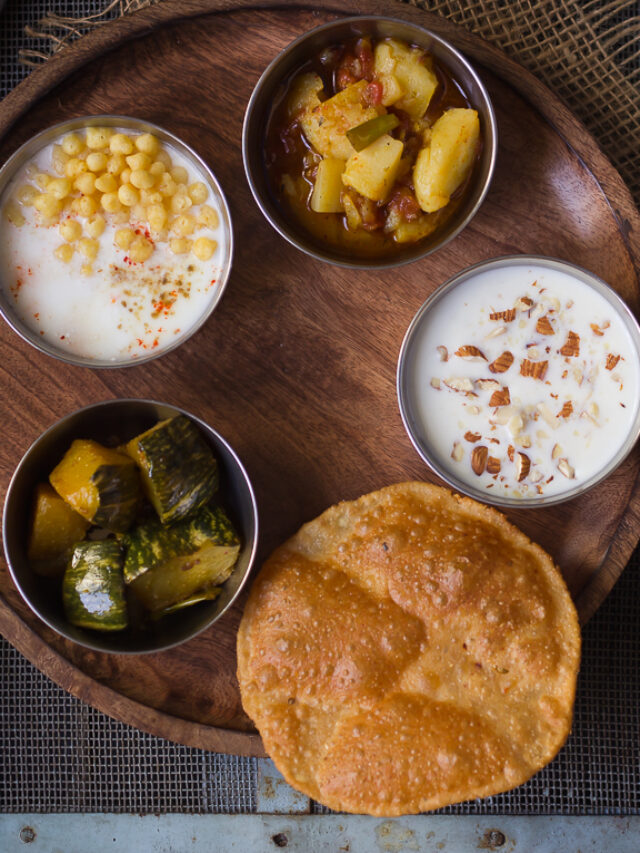
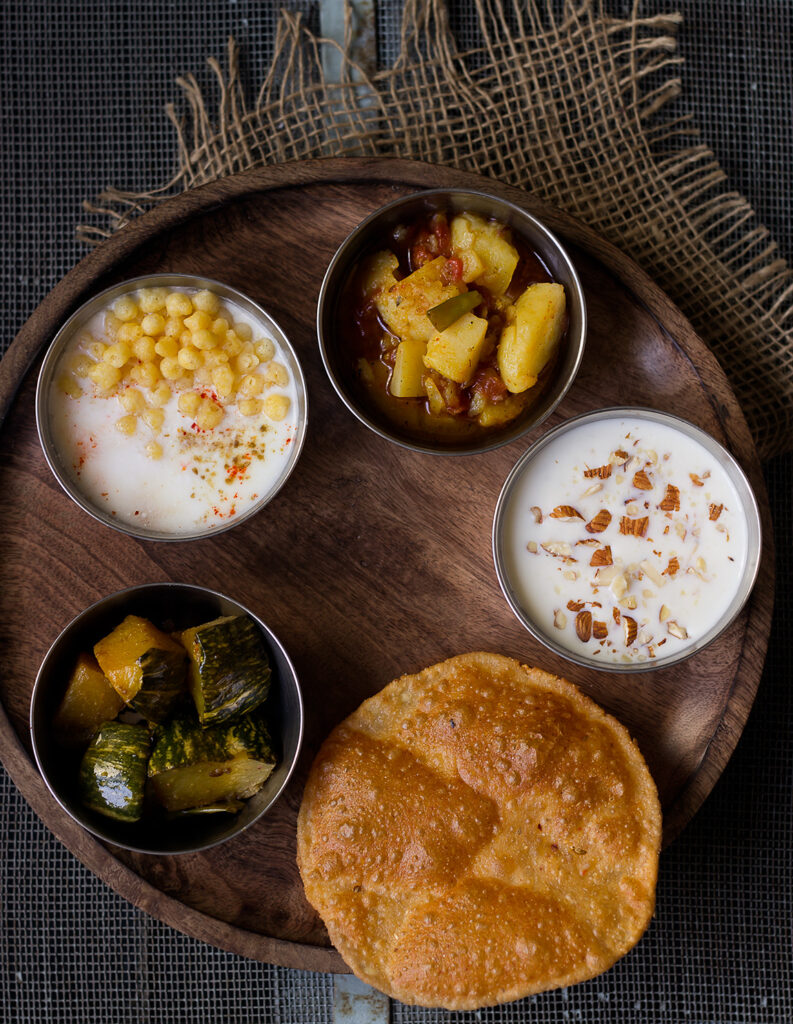
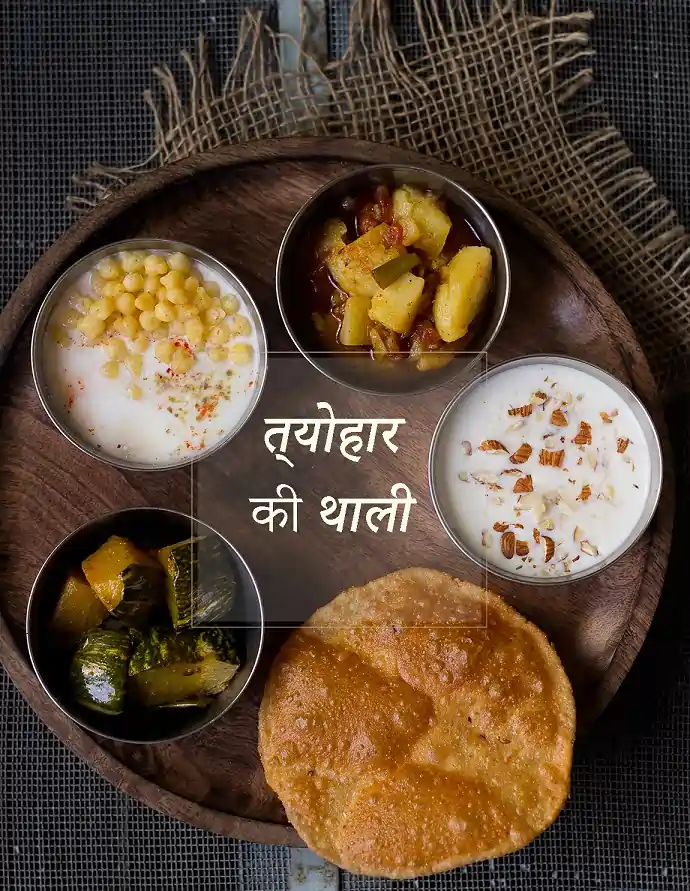
Easy and Healthy Navratri Recipes You Can Make at Home
When it comes to fasting, I’ve always believed that food should feel light, nourishing, and comforting. Over the years, I’ve learned that easy and healthy Navratri recipes you can make at home don’t have to be complicated – sometimes the simplest meals are the most satisfying. For me, cooking during these nine days is about staying connected to tradition while also keeping it practical for a busy lifestyle. Using fresh ingredients, satvik spices, and a few time-saving tricks, I try to create meals that not only keep the spirit of Navratri alive but also make the festival stress-free and joyful for the whole family.
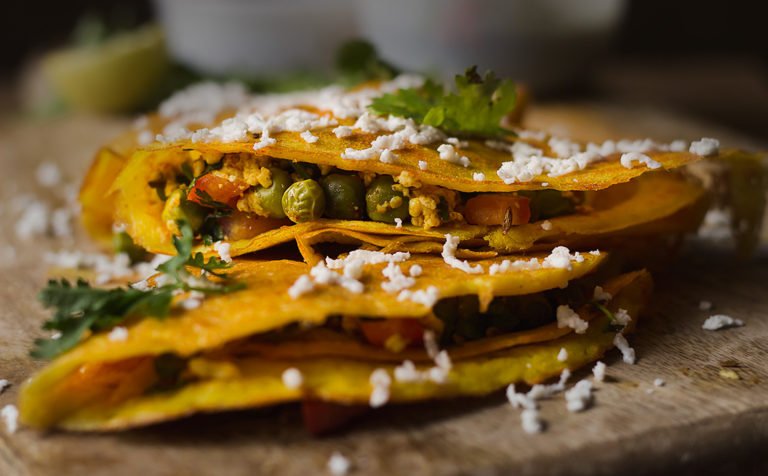
[custom_posts category=”no-onion-no-garlic”]
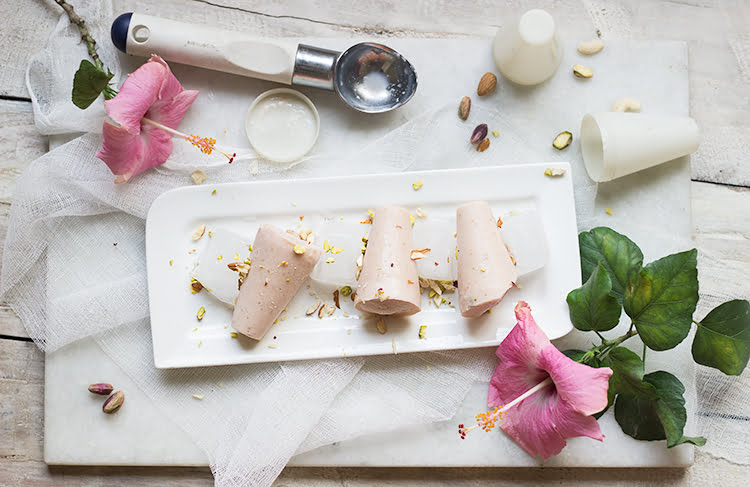
[custom_posts category=”puddings-and-custards”]
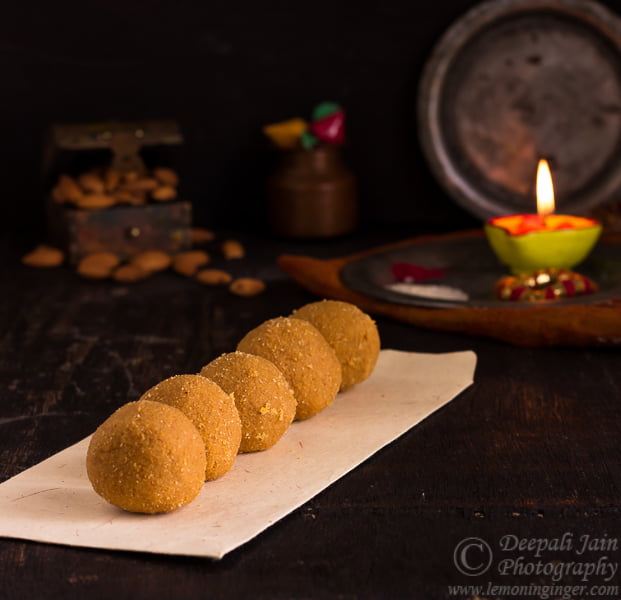
[custom_posts category=”sweets”]
Tips to Make Navratri Cooking Easy & Enjoyable
Over the years, I’ve realized that cooking for nine days of fasting doesn’t have to feel overwhelming. With a little planning and some smart choices, Navratri cooking can be both easy and enjoyable. Here are a few tips that have worked beautifully for me and my family:
- Cook with Joy, Not Pressure – For me, the real essence of Navratri fasting food lies in enjoying the process. Cooking becomes more meaningful when I see it as a part of the devotion and celebration, not just a chore.
- Plan Your Meals Ahead – I like to make a rough meal plan for all nine days so I don’t repeat the same recipes too often. It keeps the menu exciting and helps balance between light meals and indulgent ones.
- Stock Up on Vrat-Friendly Ingredients – Keeping essentials like samak rice, sabudana, kuttu flour, makhana, nuts, and rock salt ready at home makes cooking stress-free. Having them at hand means I can whip up a dish without last-minute runs to the store.
- Keep Recipes Simple & Satvik – Navratri vrat recipes are meant to be wholesome and light, so I avoid overcomplicating them. Fresh fruits, milk, and minimally spiced dishes not only taste better but also keep the body energized during fasting.
- Use Time-Saving Tricks – I often soak sabudana or prepare dough in advance so that cooking is quicker on busy days. Small preps like roasting nuts or grinding spices beforehand save a lot of time.
- Experiment with Variations – Even within vrat rules, there’s plenty of room to get creative. I enjoy trying small twists—adding different spices or pairing dishes in new ways—so that meals don’t feel monotonous.
Final Thoughts
As Navratri comes around each year, I’m reminded that it’s not just about the rituals or the food—it’s about the moments we create around them. For me, these Navratri vrat recipes are little pieces of tradition passed down, shaped by family memories, and seasoned with love. Cooking during these nine days always feels special because it’s more than preparing a meal—it’s an offering, a way to pause, connect, and celebrate devotion in the simplest, most heartfelt form.
I hope these easy and healthy Navratri recipes inspire you to add your own touch of joy to the festival. Whether you’re fasting with family, preparing prasad, or simply looking for wholesome satvik meals, may your kitchen be filled with warmth, togetherness, and the spirit of Navratri. After all, the true essence of this festival lies not just in what we cook, but in the love and devotion we share with those around us.
FAQs on Navratri Recipes
During Navratri, vrat-friendly foods include sabudana, samak rice, kuttu flour, singhara flour, makhana, fresh fruits, dry fruits, milk, and rock salt. These are considered satvik and form the base of most Navratri vrat recipes.
Common flours used in Navratri fasting food are kuttu ka atta (buckwheat flour), singhara atta (water chestnut flour), and rajgira atta (amaranth flour). These are perfect for making pooris, rotis, and snacks that are both filling and healthy.
Yes, absolutely! You can enjoy easy and healthy Navratri recipes by keeping your meals light—roast or steam instead of deep-frying, use curd or fruits for natural sweetness, and focus on portion control. Many Navratri fasting recipes are naturally low in calories and high in nutrition, making them great for weight management.
Yes, dairy products like milk, paneer, and curd are allowed in most traditions. They add protein and balance to your Navratri meal plan. For a lighter option, try homemade Navratri recipes with yogurt-based dishes that keep you cool and energized.
Definitely! Many Navratri fasting recipes can be adapted for a vegan diet. Replace dairy with almond or coconut milk, and use plant-based yogurt. This way, you can enjoy healthy Navratri recipes at home without compromising on taste or tradition.
The best way is to pre-plan your menu and stock up on vrat-friendly ingredients. Pre-soaking sabudana, roasting makhana, or prepping dough in advance can make Navratri cooking much smoother. This keeps your meals quick, simple, and stress-free.
Regular rice is not consumed during fasting, but samak ke chawal (barnyard millet) is a popular substitute. It cooks quickly, tastes similar to rice, and is a staple in many Navratri vrat recipes.
If you’re new to fasting, start with simple dishes like fruit bowls, roasted makhana, or samak rice khichdi. These easy Navratri recipes are light, filling, and don’t require too much time in the kitchen.




Join the Conversation
We'd love to hear your thoughts